
Your core, the Transversus Abdominis muscle; The key to a Stronger Back and Flatter Tummy
What Your Core Really Is – And How to Work It Effectively
Today we’re looking at one key muscle in your core: the transversus abdominis. We’ll chat about what it does, why it matters, and how to switch it on properly. Once you understand how this muscle works, Pilates suddenly makes a whole lot more sense — especially when it comes to easing back pain and slimming the waist.
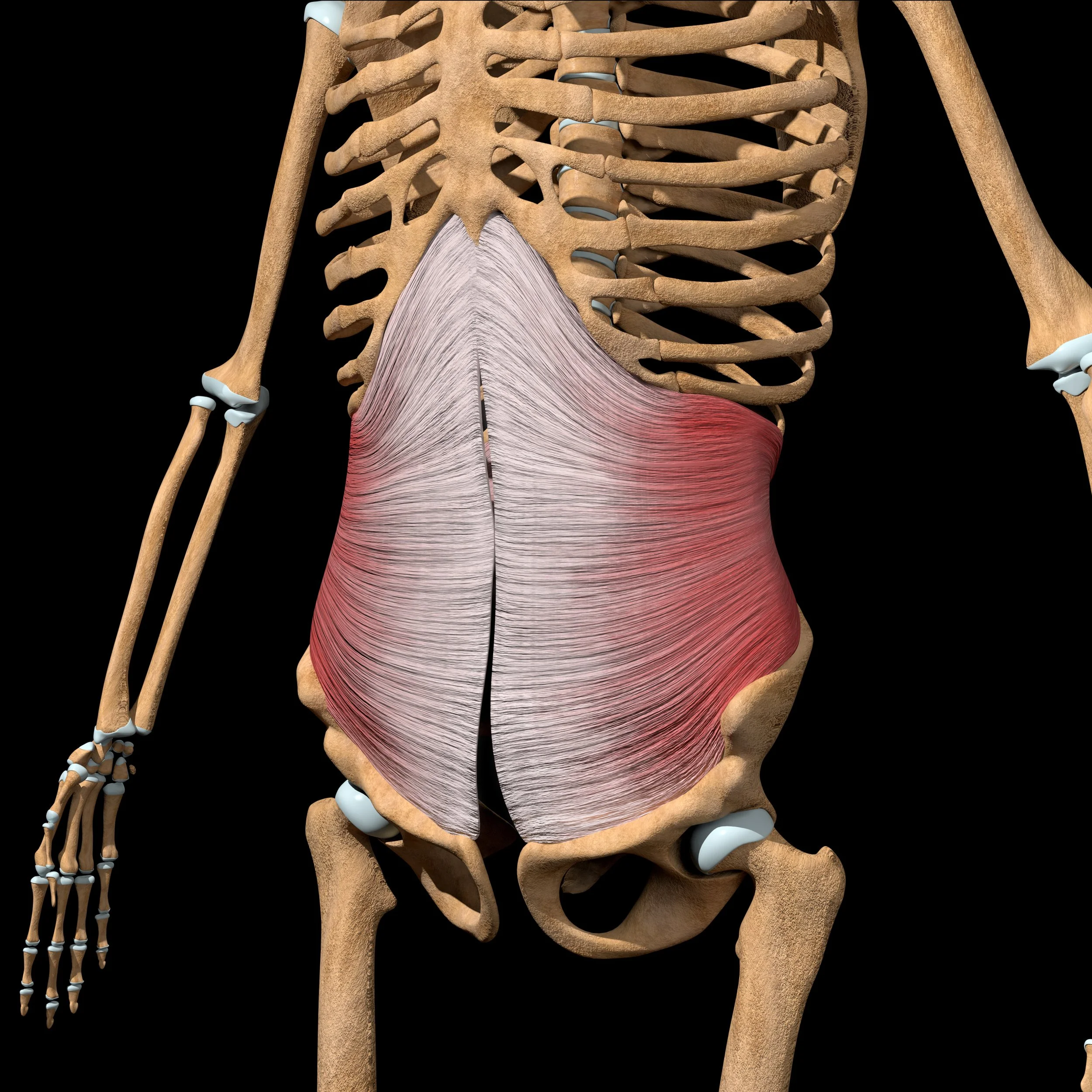
Meet Your Transversus Abdominis
The transversus abdominis (often shortened to TVA) is the deepest layer of your abdominal muscles. It sits underneath everything else, wrapping around your waist like a natural corset. It attaches to:
Either side of your spine
The inside of your lower ribs.
The top of your hip bones (important for checking your core engagement)
The front of your lower tummy, meeting in the centre to create a strong band of support
Its main job is to stabilise your spine, hold your middle together, and keep everything supported during movement.
Why the Transversus abdominus (TVA) Matters
Because it’s so deep, the TVA creates internal pressure that protects the spine and pelvis. It’s the foundation of a strong, functional core.
A common misunderstanding is that activating your TVA is the same as bracing hard — it isn’t. Proper activation is gentle and controlled. I’ll show you exactly how in the video.
How the TVA Supports Your Back
Physiotherapists in Australia studying back pain discovered something fascinating: the TVA switches on before you move your arms or legs. It’s your body’s way of steadying the spine automatically.
But in people with back pain, this timing can be lost. The muscle doesn’t “fire” as it should, leaving the spine less supported. Strengthening the TVA helps re-train this timing and reduce strain on the lower back.
You might have a weak TVA if you notice:
Achy or tired lower back after standing or walking
A lower tummy that feels like it bulges forward
Poor posture
Wobbly balance or difficulty stabilising
A “giving way” feeling in the lower back when bending, squatting, or running
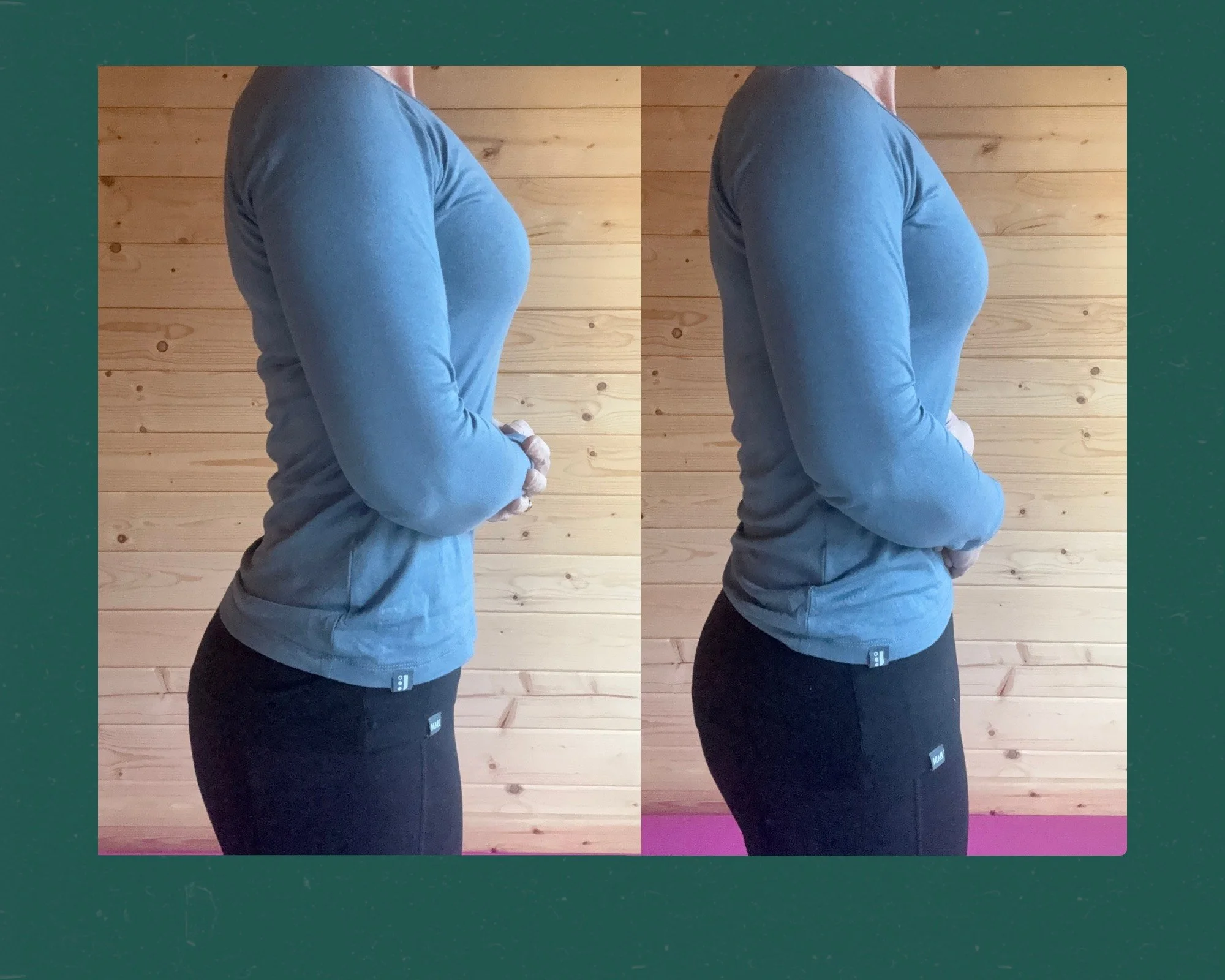
If your pelvis tilts forward (sometimes called a “duck back”), your lower tummy tends to stick out. Strengthening the TVA helps to gently draw the pelvis into a better position and support the spine. Because the TVA works like a corset, a stronger one will naturally draw the tummy in and help define the waist.
This muscle is a natural corset so not only does it give support, but it also pulls the tummy inwards on contraction and strengthening this muscle over time can help to cinch the waist.
How to Activate Your TVA (Without Bracing!)
Let’s start with what not to do.
If you grew up knowing how to brace for a punch — forget that. We’re going for subtle, not forceful.
Step-by-step
Lie on your back with your knees bent.
Gently draw your lower tummy downwards towards the floor.
Let your ribcage soften and “melt” towards the floor.
Now, let’s check it’s working
Relax your tummy.
Place your hands on your hip bones (as if you’re about to tell someone off!).
Slide your fingers an inch in and an inch down.
Gently pull your lower tummy towards the floor again.
You should feel a slight firming under your fingertips. Not gripping or pushing — just a gentle tightening.
If it’s tricky to find, try lifting your pelvic floor at the same time.
Still nothing? Move your fingers slightly — everyone’s anatomy sits a little differently.
Video showing how to Activate transversus abdominus, how to check you have activated it and also the difference between this and bracing.
Adding Movement
Once you’ve found the activation, keep your pelvis and ribcage steady and gently slide one foot away from you (keeping the foot in contact with the floor). Don’t completely straighten the knee, keep it slightly bent. All the while, keep checking with your fingertips that the TVA is still working.
You’ll feel a subtle effort through the tummy, even if you’re quite strong. If you don’t feel this subtle effort /muscle work. There are a few reasons this might be happening.
Your back might lower back might be arching, as your foot moves away or your pelvis rocking like a see saw.
You are loosing the engagement of TVA (likely as the foot starts the movement or the knee is almost straight)
You are straightening your knee and your engagement is n’t holding at the point where your leg is straight.
This exercise is called one leg stretch level 1
If it’s still not quite clicking, try my free online videos or my beginners’ Pilates sessions — there’s plenty more guidance there.
Why this strengthens the Transversus abdominus
When you move your leg away from your body, your spine and pelvis naturally want to follow the movement. It’s completely normal. But when you keep everything steady using the TVA, you’re challenging the muscle to support you against that pull — and that’s exactly how it gets stronger.
